Webinar
Masterclass: Inside the Deal—Why We Said Yes to Oura

Oura is redefining personal health tracking with its sleek smart ring, offering insights into sleep, activity, and overall wellness.
See video policy below.
In this exclusive masterclass, Alumni Ventures Managing Partner David Shapiro will delve into the sourcing, evaluation, and decision-making processes that led to our investment in Oura.
The company recently secured a $200 million Series D funding round, elevating its valuation to $5.2 billion. The acquisition of Veri and partnerships with organizations like the U.S. Air Force highlight Oura’s strategic efforts to expand its rapidly growing, data-driven health ecosystem and integrate advanced technologies into everyday life and wellness routines.

David will discuss the criteria used to assess Oura’s potential and how the company stood out in a competitive landscape. This session offers a behind-the-scenes look at venture capital investment strategies and the factors that drive high-conviction decisions.
Why Attend?
- HomeDeal Breakdown: Gain an inside look at the sourcing and diligence process behind our investment in Oura.
- HomeVC Best Practices: Learn how top venture firms assess high-growth startups in competitive markets.
- HomeReal-World Insights: Hear directly from Managing Partner David Shapiro about what it takes to back a breakout company
Reserve your spot today for this insightful discussion.
Alumni Ventures is America’s largest venture capital firm for individual investors.
Frequently Asked Questions
FAQ
Hey everybody, welcome to today’s masterclass Inside the Deal: Why We Said Yes to Oura. So we’ll walk through lots of detail on Oura, which is really the ring. I guess I could do show and tell right off the bat—I’m wearing it. I’ve been wearing it for, oh, I don’t know, probably about six years or so, seven years now, right? All the way through. So lots of sleep data.
My name is David Shapiro, managing partner with Alumni Ventures, and I’m really glad to have you join us and walk through it all with you. Just as a reminder, this presentation is for information purposes only. It’s not intended as an offer to sell securities in any way. The rest of the disclosure is here, and with that, let’s jump in.
A little on me, and then we’ll get right into Oura and the deal and all of the dynamics, I suppose. My journey through and into venture capital—I’ll go a couple bullets down and work upwards. I was undergrad from Yale in ‘91 and Tuck for business school. I was in private equity and venture capital a long time ago with GE back in the nineties after Yale. I was there for about seven, eight years or so in their private equity and venture group focused on late-stage venture and growth opportunities.
After business school, I co-founded a business in technology but then ended up joining a firm called 3i, which is a global venture and private equity firm, and was there for a good 10 or 11 years or so before joining an operating company in an operating capacity with a company called DataZoo. That was all pre-coming to Blue Ivy Ventures and Alumni Ventures, which was 2016. I’ve been here for the past nine years or so managing and running Blue Ivy Ventures.
With that, let’s jump into Oura in more detail. You can see the ring there, and what’s cool in it is the stuff underneath. I showed you the ring, but it’s the sensors underneath that I find really cool and fascinating—that’s where all the magic occurs. We’ll walk through why we invested in the company, market tailwinds and larger trends we’re seeing in digital health and wearables both then and today. It kind of played right into that strength. Then a little bit on the product, where they are today and their strategy. We’ll talk a little about the monetization beyond hardware—how did they do that? It was an important, critical part of their business and model, actually. There are some key lessons we’ve learned along the way, and we can share all of that as we go forward.
Let’s go back a little bit first. This is really a lot about sleep tracking and how it’s moving to whole body health, right? Oura began as that sleep tracker and has now evolved, for those that know, into a more full-scale health monitoring tool. It was focused on sleep, which is a great place to start—we all do it every day, and that gets into daily usage. So many people, me included, wake up and the first thing we do is check our data—check how we slept and see how much REM sleep and deep sleep. Along the way, they’ve added heart rate tracking, body temperature, sleep quality, readiness—which is really, are you ready for the day? When did your heart rate get to a good level the night before so you know how much you might want to focus on working out the next day?
Temperature can be an advanced illness tracker, almost a signal. They’re now adding glucose monitoring and meals. So again, a bunch of things they’re able to do and track, which is fantastic. It becomes more of a platform play.
The ring itself got started from Nokia founders and tech folks out of Finland, so the original heritage of the company is there—with this vision of really revolutionizing personal health. Wearable tech is the backdrop.
How did we get to it and get to know it a little bit? This is a great book—I highly recommend it. It’s by Matt Walker. His own admission: sleep-inducing. He doesn’t mind. It’s a compliment. But it’s great. I’d encourage anyone who’s curious about sleep. This was really a foundational book around Why We Sleep. I read this back in 2018, and what I took away was: sleep is a key pillar of health. Now that sounds almost trite and common, but in 2018, the notion was still, “I’ll sleep when I’m dead.” Reading Matt’s book helped me see it in a whole different light.
That led me to buy an Oura ring as I looked at different trackers or ways of getting more intelligent about sleep. I got a ring and it was great—it made sense to me. I actually connected with Matt Walker through one of our Blue Ivy and AV investment committee members. I wanted to get to know him and the sleep space a bit more. In fact, shout out to our CEO Mike Collins—he and I were trading notes, and I shared the book with him. He’s an avid reader. I said, “Mike, you should read this. You’ll love it.” He kind of wrote me back like, “You should talk to Matt.” And I thought, “Why would I want to reach out to a PhD?” But in the dialogue, he said, “Sleep is an underinvested space.” And the lightbulb went off. I thought, “Absolutely right.”
Matt pointed me toward a different company in the space that was raising capital, which was around a totally different wearable. But the net of it was: I started thinking more about how we could invest in this space. I was staring at the data every day. It became logical to find my way to Oura.
Turns out, back in that day, Oura’s chairman was an early angel investor—a Yale alum—that got me a little more interested as well. I ultimately went a little bit around the world to get to know Oura. Back to the Finnish heritage of the business, I had an old Finnish colleague from my 3i days. We’re still in touch. I reached out to him. I just had a feeling—“I bet he knows somebody that knows somebody.” Sure enough, I remember writing him at 11:30 at night, and by the next morning he had written one of his founders, who had written another colleague, who was one of the founders of Oura, who then connected me to the CEO, who lives in San Francisco and is U.S.-based. Kind of around the world to get to know it.
Additionally, the CEO of one of our portfolio companies, Roan, knew Oura and the CEO. So we triangulated. The net is I got a chance to really pitch and get to know Oura more directly as a round was coming together. It was the Series B round, end of 2018 into early 2019. With the network that we have and the consumer-facing ways we could help promote and support brands—in particular, the CEO Harpreet and I had a good rapport—he got the logic and made room for us in the round so we could support Oura going forward. That’s how we got to know the company—kind of a roundabout approach—but the network opened the door for the investment back in 2019.
So the investment opportunity—we highlighted it already a little bit—but wearable health tech, right? It was, I guess I’d say, at an inflection point and it’s just continued. The charts show it. The demand and the size of the market is large and getting larger. Particularly there’s what’s called Health Insights. I think real-time health insights—everything from continuous glucose monitoring, which is also on the rise, and trackers. Fitbit was acquired by Google around the early part of this time, I think if I remember right, maybe so—validating the place within big tech for companies and data like this. And of course, there were new revenue models emerging around subscription-based health insights. So really good time to sort of jump in, I suppose, and that’s played out well. So those also became tailwinds, I guess I’d say.
The growing awareness of Matt Walker’s book was a huge catalyst for everybody to be more aware of sleep and to bring it into our frontal lobe and be just more thoughtful about it—and then maybe want to track it, right? His book, podcasts of course took off. This is Andrew Huberman and Peter Attia, for those that know, talking almost weekly on the importance of sleep and how to get better sleep, etc. One of the best ways is, of course, to track it—whether that’s an Apple Watch or maybe a Whoop or an Oura ring—they fit right into that so nicely. Obviously, there’s a preponderance of folks that aren’t getting enough sleep, so that’s always helpful. The more we’re aware of those dynamics, the more we want to address it. So the global sleep market really started growing and is projected to hit $80 billion or so a few years ago.
All really tailwinds. Some of the competitive advantages of Oura—what set it apart? Well, there’s some things, but we listed a few on the left and I’ll highlight a couple more. But really, unbelievably great user engagement. I mentioned it at the outset. Not everybody saves the ring, of course, but for those that do, it’s years. 75% of users check the app within an hour of waking. I do it within five to eight minutes. It’s the first thing I do—my wife does too. Everybody knows the joke now, like, “How’d you sleep?” “I don’t know—let me check my data.” We don’t even answer until we confirm how we feel. It’s amazing how much presence Oura has around that stuff.
Word of mouth was strong. I can’t tell you the number of people around here that have Oura rings, largely from that word of mouth. And one of the best parts was the syndicate that came together—it was really perfect and right on point with our model. It included Google’s Gradient Ventures, a venture firm set up within Google. Marc Benioff was an investor, as well as Square. The big lead was Forerunner Ventures. Some of you may not know, but they’re really experts in consumer—it’s almost all they do. They have tons of great successes. So, with them guiding at the board level on how a consumer company grows, it really checked a great box for us.
There are some technical things that are better—I’ll digress and share. Some people think, “Well, can you do it with an Apple Watch?” I have an Apple Watch. I never check it, but I suppose I could. The important thing to note is that Oura is more accurate—and there are some benefits. The wrist is hard to really identify REM sleep and deep sleep. It’s not as accurate in short, because you’ve got to get through some bone and figure out the sensors. And it’s not as accurate.
Oura, I will hold—my hand is sitting here—there are arteries that run right along our fingers. So it’s really nice that the ring sits right here. You never notice it—I don’t notice it at all when I sleep—but it’s sitting right on top of an artery. And so, the sensors that it has in it can be a lot more accurate around the cycles of sleep. That’s where it starts. But also heart rate, heart rate variability, temperature—all the other things it can gather are, again, more accurate, largely due to the sleep component. So I’d put that in the competitive advantage category.
Okay, some of the risks—wearables. There’s competition. I just mentioned the Apple Watch. Whoop, for those that know, is another wrist-based device that tracks a lot of health information, largely for performance only. If you’re lifting weights and want to know a lot more of those kinds of metrics, it does do sleep, but again—wrist issues. So I see those as a little more of a comparison. You only have two wrists out there. But rings don’t really compete with Apple Watches. As you can see on me—I wear both.
Fitbit is more of a step tracker than it is really a true sleep component. But anyway, these were certainly big players out there. And as a hardware—largely hardware—play initially, we very much had to bear that in mind.
So let’s fast forward a little—how has it done, and where have they gone? I think one of the key elements, always part of their plan, was to not be hardware-only. I remember he and I were talking about this way back—how to crack into becoming a software part of the model too. And they did it really, really well. They added a subscription, but it’s low enough where it’s not overly burdensome. I was grandfathered in early—I think it’s $6 a month or something like that. So for daily data use, people who use it don’t even think about the cost. It’s small, but it’s grown to be a meaningful part of overall revenue. And because it’s subscription-based software, it helps with retention, it’s very predictable, and it’s high-margin.
There’s a lot that happens with software. That combination of hardware and software—they executed that really well. Then they added other features. It’s not just sleep tracking anymore. Oh—stress! I forgot to mention stress. I check that every day. There’s a resilience score, there are stress levels it provides insight on. This largely has to do with your HRV—heart rate variability—throughout the day. Then there’s recovery. Women’s health features are built in, which is great—all of this beyond just sleep tracking.
And I’ll share—I just got news from Oura as a consumer: they’re adding two things, including glucose monitoring (now live), and meals. So, many people use different apps for tracking things like meals—but I think it’s great that Oura is my place, my hub, for all of this. Sleep, readiness, activity—it tracks my steps, I can add activities, stress levels, heart rate throughout the day, etc. And now, meals and even glucose monitoring. That’s a nice extension.
They recently did a funding round led by Dexcom, one of the leading continuous glucose monitoring companies. So for me, that was a foreshadow of what was to come. And actually, it came this week—they announced their own glucose monitor. I don’t know for sure who makes it—likely Dexcom—but the point is, they’re adding a whole new dimension. That pushed the valuation up nicely as well. So it’s been a real success, and the company has executed extremely well.
Some lessons as we reflect: first, what Oura underscored for us was the importance of the syndicate. Great companies attract great investors. That was the case here, and it’s a big part of our model as co-investors. We’re looking to see who’s leading the company, who’s on the board, who’s helping drive the bus—because we’re not in the room for those key strategic decisions. So we need to have a high level of trust with players like Forerunner and Gradient, along with others, particularly as the company grows. They brought great strategy support and checked a lot of boxes.
Just to share a little more, here’s a snapshot of the firms we often invest alongside: Sequoia, Andreessen Horowitz, Kleiner Perkins, Bessemer, KLA. We’ve done 22 deals with Bessemer, 24 with Sequoia, and 46 with Andreessen, across the Alumni Ventures portfolio. So we’re able to situate our funds right alongside the best venture firms in the business. That was the case with Oura as well.
Hardware is hard—that’s true. Scalability and margin are always concerns. But we liked the plan, the vision, and then the execution. Oura added the subscription component and really pulled off the software side of their model, which provided recurring revenue. They did it expertly.
So that’s a quick walkthrough of Oura. First of all, I should plug the product—I love it. I wear it every day. I have, as I mentioned, for almost seven years now. Go get one. They’re great. I don’t think you’ll be disappointed.
This is the kind of company we also invest in through our Health Tech Fund. In addition to some of our alumni funds—some of you may know—we have focused funds, one of which is the Health Tech Fund. One of the trends we focus on there—and I co-head that fund—is the intersection of wearables, biometrics, and AI. I’d say diagnostic tools, broadly. I put this loosely under the umbrella of “Medicine 3.0,” which is about being much more proactive with our care, being more personalized, and again, most importantly—proactive.
Medicine 2.0 is how we operate today with the healthcare system. It’s quite good at treating—right? If you’re sick or in an emergency, you go to the ER—they’re really good. We’ve learned a lot about treating diseases like cancer. But can we prevent it? How do we get more proactive about that? Data is a critical component, and sleep is a major part of that—as well as all the metrics you get from something like an Oura ring. We’re really focused on biometrics and wearables to help enable proactive care.
If you’re interested in companies like Oura—and in being a backer and part of their journey—we do have the Health Tech Fund. Reach out if you have a question or are curious. There’s a QR code, and of course, you can reach us anytime on our website. We can share more about the Health Tech Fund as part of our overall platform.
At a high level, we’d like to be your venture partner. Think of Alumni Ventures as your go-to place for venture investing. Venture is an incredibly important asset class—it should be part of everybody’s portfolio, even in a small way. But it’s been hard for individuals to access—that’s where we step in. We make it accessible, not just for big institutional investors but for individuals.
Just to zoom out a bit: Alumni Ventures has been around since 2014. I joined a couple of years later to help get Blue Ivy Ventures off the ground in 2016 as the third alumni fund family. Since then, we’ve raised $1.4 billion from close to 11,000 investors. We have a portfolio of about 1,500 companies. We’ve been one of the most active venture firms in the country over the past couple of years. That level of deal flow is critical. And again, co-investing alongside the best investors, giving individuals access to companies like Oura—companies that are otherwise off-limits until they’re public or far along the value curve.
We have about 120 employees. Our headquarters is in Manchester, but we also have offices in New York, Boston, Chicago, and Menlo Park.
With that, I’ll wrap. I’m really glad we were able to share more about Oura. If you have questions—about the company, healthcare, or venture more broadly—feel free to reach out. We look forward to engaging with you. Thanks, everybody, for your time. Appreciate it. Take care.
About your presenter
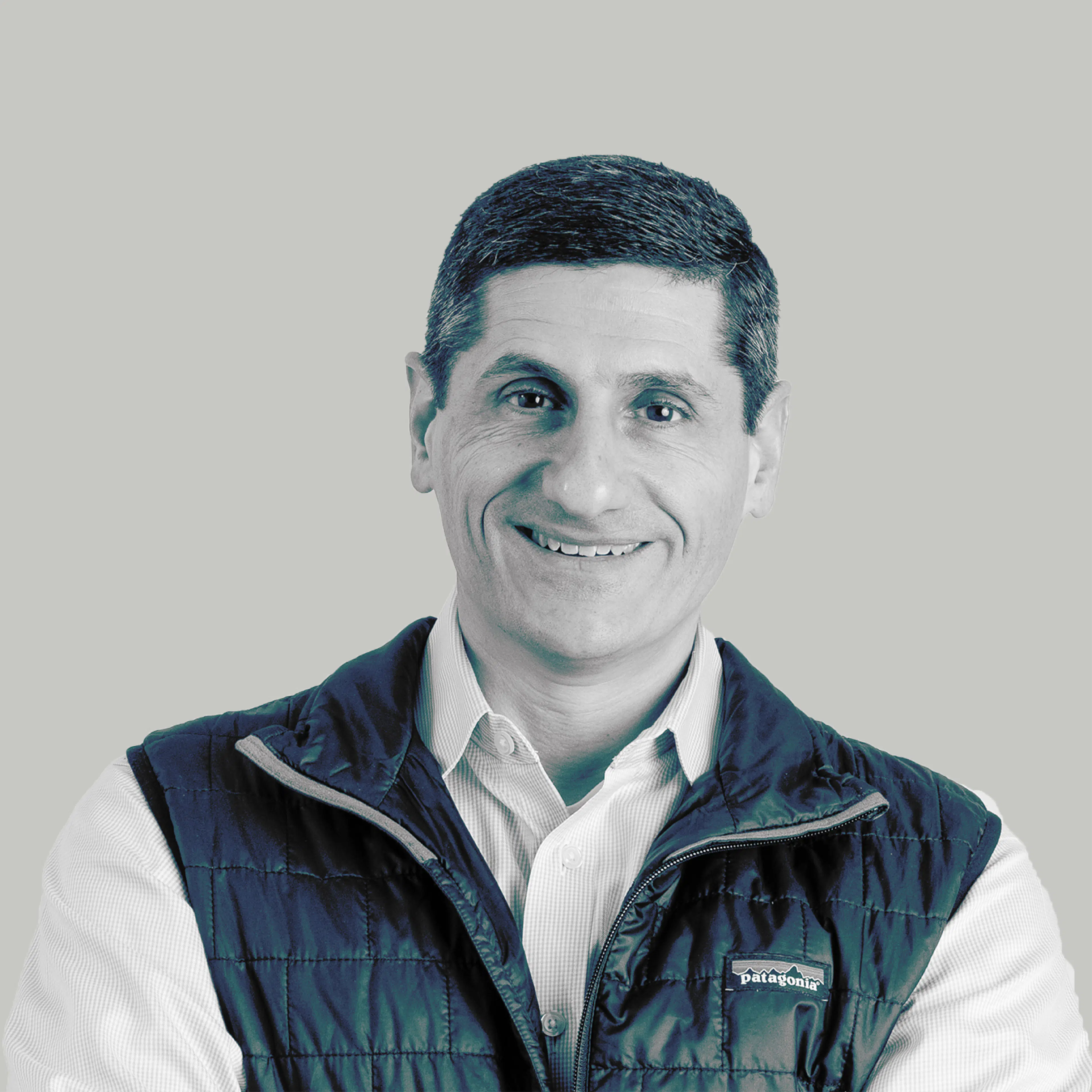
David has over 25 years of experience as an investor, adviser, and board member, with expertise across early- and late-stage venture capital. Before joining Blue Ivy, David was Senior VP of Corporate Development and Business Development for DataXu, a marketer-aligned data and analytics company. Prior to his time at DataXu, he was a Director with the global venture and private equity firm 3i, including board directorships with ten companies. He also worked in the private equity group at GE Asset Management, where he specialized in late-stage venture and growth capital opportunities. David received his BA in History from Yale in 1991 and an MBA from the Tuck School of Business at Dartmouth in 2000.