You qualify as an Accredited Investor if you meet ANY of the following:
- Home
Income
$200k annual income individually (or $300k jointly with a spouse) in each of the two most recently completed calendar years - Home
Net Worth
$1 million in individual net worth or joint net worth with a spouse - Home
Professional License
Maintaining a Series 7, Series 65, or Series 82 license in good standing with a FINRA member firm
Sign Up to Learn More
Want more details on accreditation criteria? Download A Simple Guide to Accreditation Verification
Why consider Alumni Ventures?
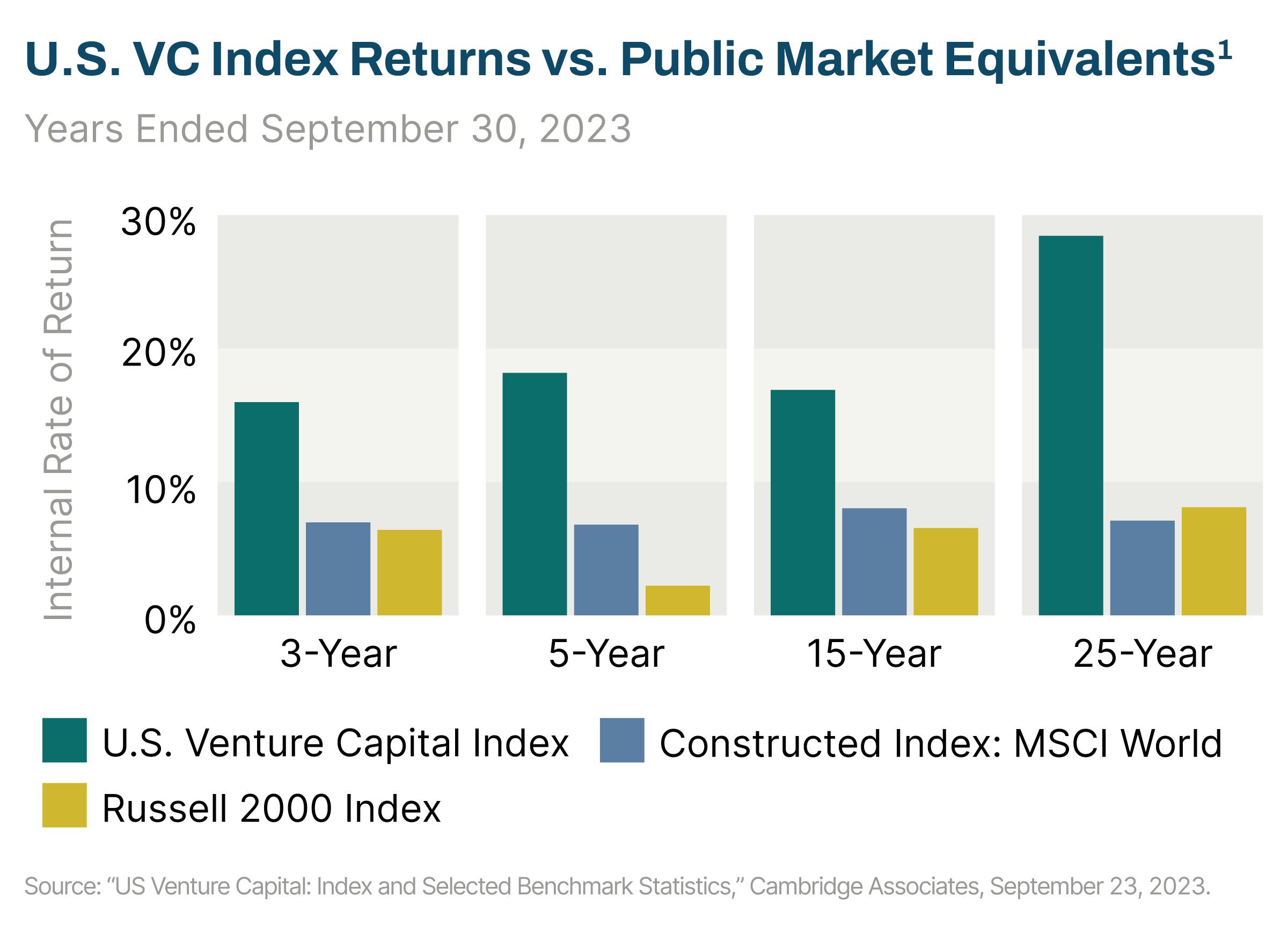
- HomeOur fund significantly outperform public market equivalents.
- HomeWe are America’s largest venture firm for individual investors.
- HomeOver $1.1B capital raised from 9,000+ individual accredited investors
- Home#1 most active venture firm in the U.S. (Pitchbook 2022)
Book a 15-minute Intro Call to Learn More
Our Story, told by Founder & CEO, Mike Collins
- HomeFounded in 2014
- HomeMission: Democratize Venture Capital
- HomeProfessional-Grade Venture Portfolios
- Home#1 Most Active Venture Firm in the U.S.
See video policy below.



(1) The aggregate performance of the AV venture funds is not necessarily representative of the performance of any particular AV venture fund or the experiences of any individual AV investor. All investment involves risk, including risk of loss. Not all venture capital investments will be successful. Past performance is not necessarily reflective of future results, and achievement of investment objectives, including preservation of principal, cannot be guaranteed. RR for AV Funds is net of management fees, and net of incentive allocations applied to amounts distributed to investors, but gross of incentive allocations applicable to unrealized gains on investments held by AV Funds. IRR for AV Funds includes Uninvested Cash, Unrealized Investments, and Amounts Distributed to Investors. For additional information, please see here.
(2) The IRR shown for Nasdaq Composite, S&P 500, and Russell 2000 indices are gross fees because indices are not managed investments. It is not possible to invest directly in an index.