How Venture Capital Funds Work
Venture Capital Fundamentals (VC 101) | Class 3
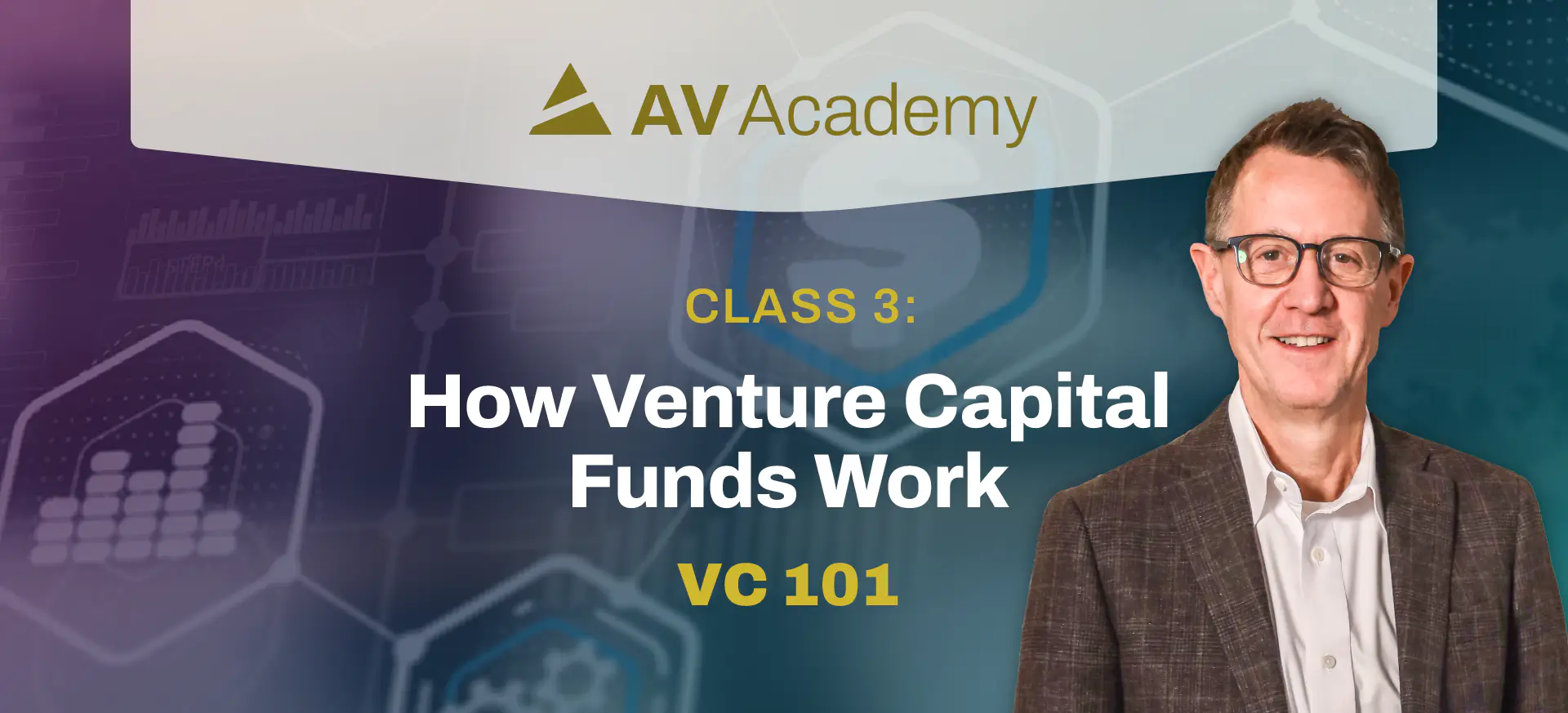
Venture capital has become an essential part of how innovative companies are built and scaled — but how the funds behind these investments actually work is often less understood. In this lesson, we introduce the structure and mechanics of venture capital funds to help you better understand how the asset class operates.
- Home
What Is This Lesson?
A foundational overview of how venture capital funds work. - Home
Who Is It For?
Those curious about how VC funds operate.
See video policy below.
Or Read or Listen at the buttons below.
Interested in Seeing Curated Venture Deals?
Prefer reading?
We’ve included the full lesson below so you can explore the material at your own pace.
Prefer listening?
We’ve linked an audio version of this lesson below so you can listen and learn on the go.
What You’ll Learn
- HomeHow venture capital funds are structured and managed
- HomeHow capital flows into and out of a VC fund
- HomeThe key stages of venture investing: seed, early, and growth
- HomeHow risk and return vary across stages
- HomeWhy venture investing requires a long-term mindset
Prefer Reading?
Frequently Asked Questions
FAQ
How Venture Capital Funds Work
Venture capital funds are structured around a simple idea: a group of investors pool their money into a single fund, which is then managed by a venture capital firm. This firm is responsible for making investment decisions, handling legal and administrative work, supporting portfolio companies, and ultimately returning capital to investors, where available. Typically, investors make one commitment to the fund, and over time, the fund returns capital through multiple distributions, often in the form of capital gains.
Venture investing happens across several stages. At the earliest levels—pre-seed and seed—companies are often just getting started, with a small team working to build a product and find initial customers. These investments carry high risk, as many companies at this stage do not succeed, but they also offer the greatest potential upside.
As companies grow, they move into early-stage investing, typically at the Series A level. At this point, businesses usually have a working product and some early revenue, and are raising capital to scale. Risk begins to decrease as companies demonstrate traction, making these opportunities more attractive to some investors.
Finally, companies reach the growth stage, including Series B and beyond. These businesses often have large teams, established products, and significant customer bases. While these investments tend to be less risky, they also typically offer lower return potential compared to earlier-stage investments.
Venture capital is a long-term asset class. Many companies that are not successful will fail early, while the most successful companies often take years to mature and generate meaningful returns. As a result, investors should expect venture funds to operate over a longer time horizon, with the most significant outcomes often occurring later in the life of the fund.
Ready to Move Forward?




About Your Instructors
Mike Collins
CEOMike Collins is an experienced operator across nearly every facet of venturing—from angel investing and venture capital to new business and product launches, as well as innovation consulting. He is a serial entrepreneur who has founded multiple companies, including one partially owned by WPP, and began his career at the venture capital firm TA Associates.

Luke Antal
Co-Founder & Chief Community OfficerLuke is an experienced startup and tech executive who has built and continues to oversee many of the processes, systems, and teams that power Alumni Ventures’ fundraising initiatives. With a strong focus on marketing, sales operations, and customer experience, he has played a key role in scaling multiple startups, often as a founder or employee #1.

Chris Sklarin
Managing Partner, Castor VenturesChris Sklarin is a Managing Partner at Alumni Ventures, where he leads Castor Ventures, focusing on investments in transformative technology companies. He has deployed over $120 million across more than 150 portfolio companies spanning seed through growth stages. Chris brings over 20 years of venture capital experience, along with a background in product development and sales engineering. He holds an SB in Electrical Engineering from MIT and an MBA from UC Berkeley’s Haas School of Business.
Alumni Ventures and its personnel provide investment advice only to affiliated venture capital funds. AV Academy is not personalized advice for any participant.
This communication is from Alumni Ventures, a for-profit venture capital company that is not affiliated with or endorsed by any school. It is not personalized advice, and AV only provides advice to its client funds. This communication is neither an offer to sell, nor a solicitation of an offer to purchase, any security. Such offers are made only pursuant to the formal offering documents for the fund(s) concerned, and describe significant risks and other material information that should be carefully considered before investing. For additional information, please see here. Achievement of investment objectives, including any amount of investment return, cannot be guaranteed. Co-investors are shown for illustrative purposes only, do not reflect all organizations with which AV co-invests, and do not necessarily indicate future co-investors. Example portfolio companies shown are not available to future investors, except potentially in the case of follow-on investments. Venture capital investing involves substantial risk, including risk of loss of all capital invested. Diversification cannot prevent investment loss; it is a strategy to mitigate investment risk. This communication includes forward-looking statements, generally consisting of any statement pertaining to any issue other than historical fact, including without limitation predictions, financial projections, the anticipated results of the execution of any plan or strategy, the expectation or belief of the speaker, or other events or circumstances to exist in the future. Forward-looking statements are not representations of actual fact, depend on certain assumptions that may not be realized, and are not guaranteed to occur. Any forward-looking statements included in this communication speak only as of the date of the communication. AV and its affiliates disclaim any obligation to update, amend, or alter such forward-looking statements, whether due to subsequent events, new information, or otherwise.