Today, Everyone’s an Entrepreneur
The Entrepreneurial Mindset AI Now Demands at Work

A few weeks ago, I wrote that most people are not entrepreneurs. I meant it. Most people shouldn’t never start a company.
Now I’m going to tell you something that sounds the exact opposite: Today, everyone’s an entrepreneur.
I’m not contradicting myself. Founding a company is a calling, and a rare and brutal one. Being an entrepreneur is a way of looking at work. And AI just made it the only way of working that’s going to matter.
Regular readers will remember that I floated a version of this in “Jobs Have Changed Forever.” This is a more pointed take on the same topic because it is going to affect all of you, and I’m a fork within the organization.
What changed

The ability to build, iterate, and learn has changed the nature of work, profoundly and forever. More is getting done by fewer people. Iteration times are collapsing.
In 2016, a good idea for a new internal piece of tech meant a budget request, spec, project manager, and launch date six months out — if it got approved at all. In 2026, it means a weekend.
In the last month, I built three working tools: a dashboard that tracks our capital plan by investing team, a rollout map of our venture investing clubs, and a capital management platform. I didn’t write a line of code (because I don’t know how), and nobody created a Jira ticket.
At AV, it’s something we’re seeing more: jobs are getting broader every month. More people are building things to help them work. It’s a dynamic ecosystem, with Darwinist characteristics (growers pushing out non-growers). Internal entrepreneurs powered by AI are creating new tools and new opportunities (that often mean new hiring). Complicated and nuanced? You bet.
Here’s what else it means. We used to hire for a slot. Write the job description, list the six tasks, find someone who’s done those six tasks before. That’s backwards now. The six tasks change every quarter — and half of them can be handed to an agent.
What we need is people who take a problem, own it, build the fix, and then go find the next one. When we reorganized our tech team this month, we built it around small strike teams of two or three, with one of the three always the internal customer. The people who need the thing are on the team building the thing. Fast.
What I mean by “entrepreneur”
I don’t mean everyone should quit and raise a seed round. Please don’t. I mean everyone at work now has to act the way good founders act. Five habits:
1. You own the outcome.
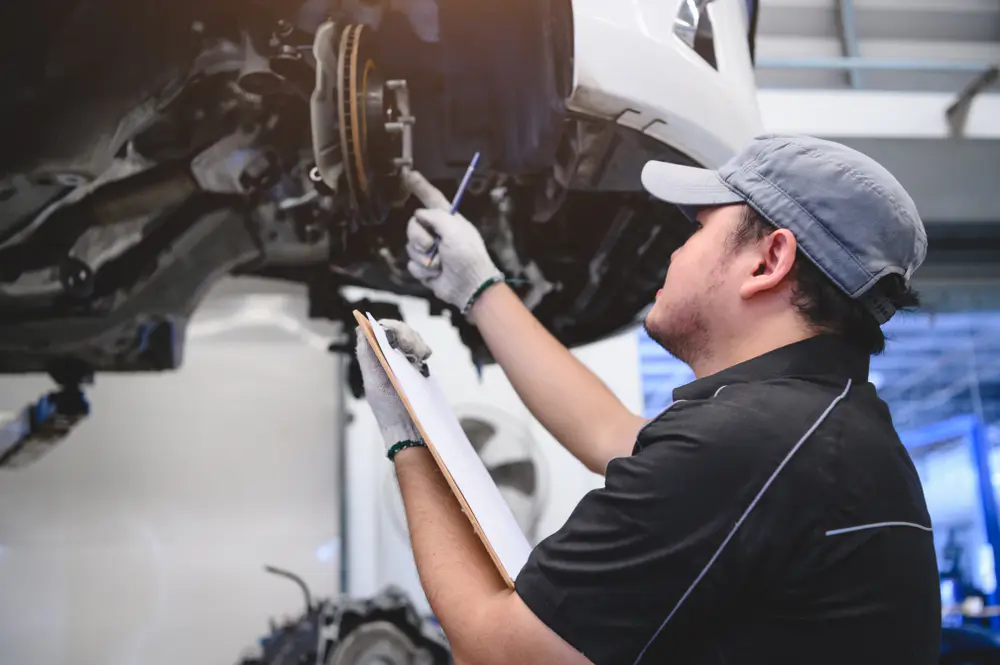
Toyota became one of the best manufacturers in the world in part because of a rope. Any worker on the line could pull the cord and stop production when something was wrong. The person closest to the problem had the authority to fix it.
That’s the mindset. If you see it, you own it. Build the solution. In the old world, you could do your part perfectly, the customer could still get a bad result, and it wasn’t your problem. That job is going away.
2. You see everything as an opportunity.

Founders see the whole board: customers, numbers, product, team, and competition. For most of the history of work, only the people at the top had that view. Everybody else got their slice and a meeting schedule.
AI ended that. Anyone can now get the data, summarize a month of customer calls, or read a competitor’s filings before lunch. And once you can see the whole board, you start seeing openings everywhere: the customer nobody’s calling, the report nobody reads, the process that could run itself. “Nobody told me” has officially retired as an excuse.
3. You run at a faster tempo.

Air Force strategist John Boyd figured out why some pilots win dogfights. He called it the OODA loop: observe, orient, decide, act. Whoever runs the loop faster wins, even in a worse plane.
Business works the same way, and AI just bolted a jet engine onto the loop. Ship it, learn, fix it, ship it again. The teams I see winning at AV — think in hours and days — not weeks and months. The ones losing are still waiting for the monthly planning meeting.
4. You act.

Vision isn’t just for CEOs. My favorite recent example at AV comes from Peter, who helps me run clubs. Recently, we were discussing more efficiently getting the right deals to the right clubs in the right way.
That conversation quickly turned into an exchange of ideas on Slack. By lunchtime, we had a first version ready to go.
5. You judge success by folks using the thing.

Founders live or die by the customer, so they don’t confuse activity with results.
We changed how we measure our own tech team to reflect this. Our core measure now is how much of our work gets automated, improved, and turned into a system that just works.
Are they using it? Can they not live without it? That is what entrepreneurs build.
Employee mode vs. entrepreneur mode
- Home
Follow the process
Create a new process, and evolve it. - Home
Wait for Tech
Ship it yourself. - Home
Keep the trains running
Make things a little better every day. - Home
Do it the way we did it last year
Evolve it, so it unrecognizable. - Home
Stay in your lane
Create a highway. - Home
Execute
Build.
If your job looks the same as it did three years ago, you’re living in Groundhog Day. Remember how that movie ends: the day never changed until Phil did. Then everything changed. (He also learned the piano.)
We describe AV to our own team as “a top-20 venture firm1,2 that acts like a startup.” The second half of that sentence is the whole point. A company only acts like a startup when the people in it act like founders.
“I didn’t sign up to be a founder.”

I hear you, and I get it. Plenty of good people signed up for a job, with a defined role, manager, and clear finish line at 5:00PM. That deal was honest and fair, but it’s becoming history.
Here’s what I say. You don’t have to start anything. You don’t have to love risk or work my hours. But the part of your job that’s pure process, the part where you move information from one place to another, is exactly the part AI is coming for, bit by bit, day by day.
If you opt out of owning outcomes, your job gets smaller every year — until it isn’t a job. That’s not a threat. It’s just the truth.
And the people who lean in are having more fun and sense of accomplishment at work than they’ve ever had. I know I am.
Your move
This is the most exciting time in my career to be at work. The distance between “I have an idea” and “it’s working” has never been shorter, and you no longer need anybody’s permission to close it.
2027 starts in about eleven weeks. So here’s my ask of every one of you:
- HomePick one process or opportunity you see.
- HomeOwn it end to end.
- HomeBuild it or rebuild it with AI (alone or with one other person).
- HomeMeasure what changed.
You don’t need a new company to be an entrepreneur. You need to own something and make it better every week. It’s like the old proverb: the best time to plant a tree was 20 years ago. The second-best time is today.
Start today.
1. “The top 20 venture investors in North America,” CB Insights, March 5, 2024.
2. “America’s Top Venture Capital Firms of 2025,” Time, August 19, 2025.
This communication is from Alumni Ventures, a for-profit venture capital company that is not affiliated with or endorsed by any school. It is not personalized advice, and AV only provides advice to its client funds. This communication is neither an offer to sell, nor a solicitation of an offer to purchase, any security. Such offers are made only pursuant to the formal offering documents for the fund(s) concerned, and describe significant risks and other material information that should be carefully considered before investing. For additional information, please see here. Achievement of investment objectives, including any amount of investment return, cannot be guaranteed. Co-investors are shown for illustrative purposes only, do not reflect all organizations with which AV co-invests, and do not necessarily indicate future co-investors. Example portfolio companies shown are not available to future investors, except potentially in the case of follow-on investments. Venture capital investing involves substantial risk, including risk of loss of all capital invested. Diversification cannot prevent investment loss; it is a strategy to mitigate investment risk. This communication includes forward-looking statements, generally consisting of any statement pertaining to any issue other than historical fact, including without limitation predictions, financial projections, the anticipated results of the execution of any plan or strategy, the expectation or belief of the speaker, or other events or circumstances to exist in the future. Forward-looking statements are not representations of actual fact, depend on certain assumptions that may not be realized, and are not guaranteed to occur. Any forward-looking statements included in this communication speak only as of the date of the communication. AV and its affiliates disclaim any obligation to update, amend, or alter such forward-looking statements, whether due to subsequent events, new information, or otherwise.