The Hidden Architect of Aging
A brief conceptual essay for discussion

For decades, the field of biological aging has increasingly refined taxonomies of what changes as organisms grow older. The most widely accepted framework — the hallmarks of aging — reasonably describes twelve interconnected processes: genomic instability, telomere attrition, epigenetic alterations, mitochondrial dysfunction, loss of proteostasis, impaired macroautophagy, deregulated nutrient sensing, stem cell exhaustion, cellular senescence, altered intercellular communication, microbiome disturbance, and chronic inflammation.
Start Investing With Healthtech Syndicate Today
Take 5 seconds. No document uploads.
Taken together, they give us a comprehensive phenotype of aging. Or perhaps the effects of aging. What they do not tell us is what sits upstream, orchestrating — or at least precipitating — these downstream failures. Even proponents of the hallmark model acknowledge that these categories are largely descriptive. They map what aging looks like; not necessarily what causes it.
A great deal of research, and amazing science and work has been focused on improving these hallmarks, often with a focus on just one: like a company focused on improving cellular senescence, or a treatment to reduce chronic inflammation. But this seems like we’re chasing down just one path, never really being able to affect multiple hallmarks or perhaps even all of them. And can we really address aging overall and improve healthspan if we are only addressing one hallmark?
As I began thinking about this more deliberately, an image that kept resurfacing was a hub-and-spoke diagram. The hallmarks form the spokes — twelve observable degradations jutting outward. And in the center, at the hub, sits a more central, causal factor. But what might sit at the root that could plausibly drive dysfunction across the twelve domains?

The more I studied this question, the more the answer seemed to point toward one candidate: the immune system.
Why the immune system may belong at the center
The immune system touches every part of the body. Its jobs include patrolling for damaged cells, clearing debris, controlling inflammation, removing worn-out cells, fighting infections, and coordinating tissue repair. In other words, it performs many of the tasks that start to go wrong with age. When the immune system weakens:
- Home
Worn-out cells accumulate.
These “senescent” cells should be cleared out, but older immune systems struggle to do so. - Home
Damaged cells slip through the cracks.
That’s one reason cancer risk rises sharply with age. - Home
Protein waste builds up.
The immune system normally helps clear misfolded proteins and damaged cell parts; when this slows, tissues become cluttered and stressed. - Home
Cellular energy systems falter.
Chronic inflammation — another feature of immune aging — directly harms mitochondria. - Home
Stem cells lose their spark.
Long-term inflammatory signals disrupt the niches where stem cells live and regenerate.
Seen this way, the immune system doesn’t look like just one player among many. It looks like the hub — the central system whose gradual decline might be driving many of the downstream effects or symptoms we call “aging.” When seen through this light, it may be that key underlying cause for which we have been searching.

So, why does the immune system decline?
If the immune system may be upstream of so many downstream effects of aging, a logical next question to consider is why then does the immune system decline? Several well-established processes contribute:
- The thymus shrinks.
The thymus is where new T-cells are made. It begins shrinking in early adulthood and steadily slows its output. By midlife, we’re producing far fewer fresh immune cells. - A lifetime of exposure adds up.
Viruses, pollutants, injuries, stress — each one forces the immune system to respond. Over decades, immune cells become worn out or exhausts some of its capabilities.
- The bone marrow ages.
The stem cells that create immune cells accumulate damage and lose their ability to replenish the system with strong, diverse defenders.
- Chronic, low-grade inflammation becomes the norm.
This “always-on” state accelerates tissue damage throughout the body and further exhausts the immune system in a self-reinforcing loop.
Notably, all of these processes begin well before many visible signs of aging show up, suggesting immune decline is not just another hallmark of aging — it may sit upstream from them.

Why this matters for how we think about longevity
If this model holds and immune system decline is indeed the central hub driving many forms of aging, then a good portion of today’s longevity research may be targeting downstream symptoms rather than the root cause. For example, there are companies focused on reducing or removing senescent cells, or dealing with microbiome disturbances, or telomere lengthening. But these may just be treating one “spoke”; not the underlying cause that may be triggering these effects.
This viewpoint opens up a path forward. Instead of treating each hallmark separately, we could focus on strategies that rejuvenate or support the immune system itself, such as:
- HomeRegenerating the thymus
- HomeRestoring the supply of young T-cells
- HomeImproving the function of natural killer cells and macrophages
- HomeReducing chronic inflammation
- HomeReprogramming older immune cells to behave more youthfully
- HomeRepairing the bone-marrow environment where immune cells are born
The fact that these immune-focused interventions seem to help multiple age-related conditions at once is exactly what you’d expect to see if the immune system does indeed sit at the center.
A hypothesis worth pressure-testing
The ideas in this essay aren’t claiming the immune system is the only cause of aging. Biology rarely works through a single lever. But using the immune system as the organizing hub does help make sense of several things:
Start Investing With Healthtech Syndicate Today
Take 5 seconds. No document uploads.
- HomeIt explains why and how the hallmarks are interconnected.
- HomeIt lines up with evolutionary expectations (the immune system declines sharply after reproductive years).
- HomeIt matches what we see in centenarians, who often have unusually robust immune profiles.
- HomeIt creates a coherent biological pathway connecting different types of age-related decline.
- HomeAnd it offers a practical target for therapies that could shift the trajectory of aging itself.
If aging is, at its core, an immune-driven process, we may need to rethink which levers are most important to pull.
This is offered as a hypothesis, not a conclusion — but it seems like a fruitful one to explore. I’d value the take of our community on where this framework breaks down, where it might be strengthened, or where the evidence most strongly supports or contradicts it.
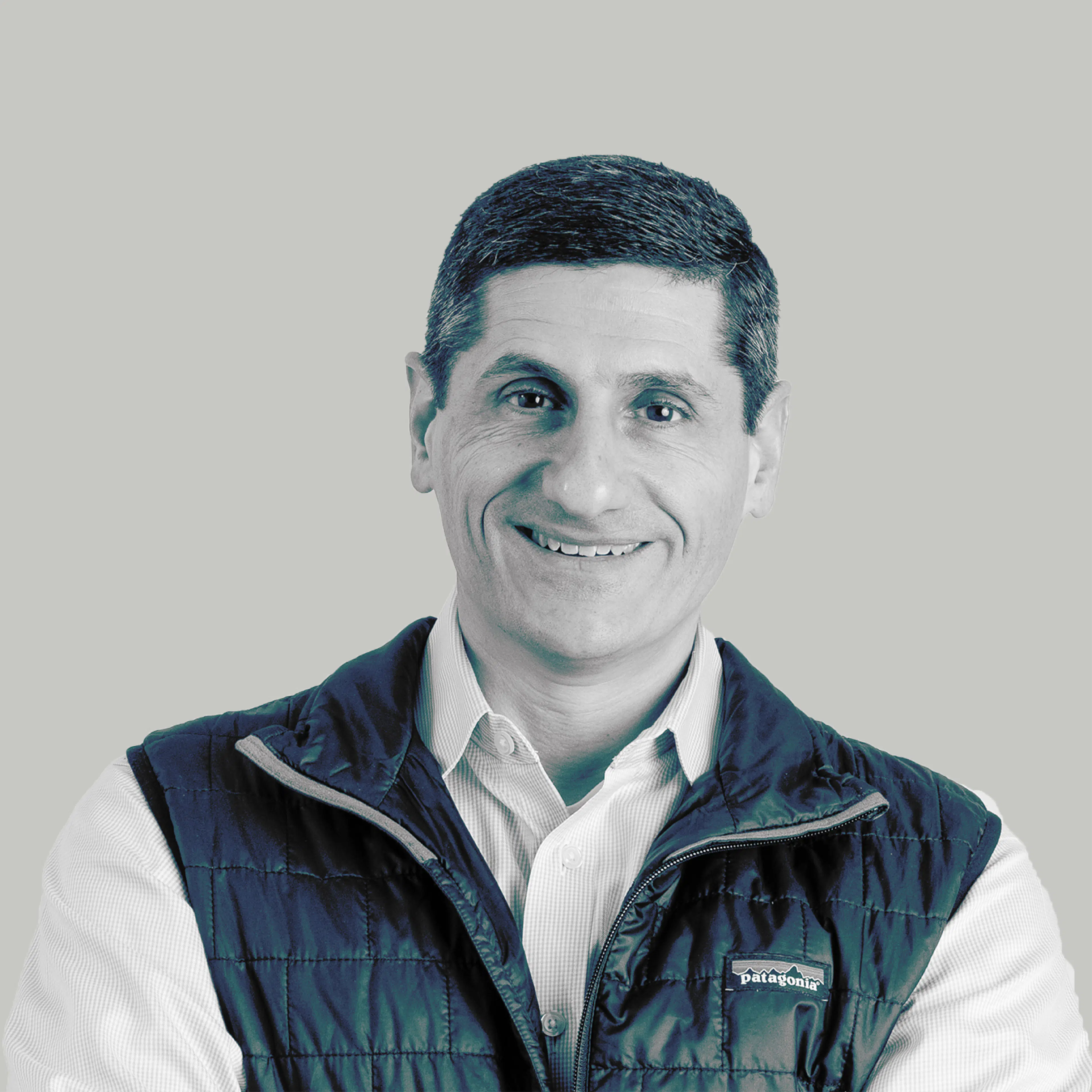
David Shapiro
Managing Partner, Healthtech FundDavid has over 25 years of experience as an investor, adviser, and board member, with expertise across early- and late-stage venture capital. Before joining Blue Ivy, David was Senior VP of Corporate Development and Business Development for DataXu, a marketer-aligned data and analytics company. David received his BA in History from Yale in 1991 and an MBA from the Tuck School of Business at Dartmouth in 2000.
Interested in Seeing Curated Venture Deals?
- Home
Easy Sign-Up
Click a button. 5 seconds. - Home
No Obligation to Invest
Only invest in deals you like. - Home
Co-Invest Alongside Leading VCs
Frequent co-investors include a16z, Sequoia, Khosla, Accel, and more. - Home
Deal Transparency
Due Diligence and Investment Memos provided. Live Deal discussions with our investment teams.
This communication is from Alumni Ventures, a for-profit venture capital company that is not affiliated with or endorsed by any school. It is not personalized advice, and AV only provides advice to its client funds. This communication is neither an offer to sell, nor a solicitation of an offer to purchase, any security. Such offers are made only pursuant to the formal offering documents for the fund(s) concerned, and describe significant risks and other material information that should be carefully considered before investing. For additional information, please see here. Achievement of investment objectives, including any amount of investment return, cannot be guaranteed. Co-investors are shown for illustrative purposes only, do not reflect all organizations with which AV co-invests, and do not necessarily indicate future co-investors. Example portfolio companies shown are not available to future investors, except potentially in the case of follow-on investments. Venture capital investing involves substantial risk, including risk of loss of all capital invested. Diversification cannot prevent investment loss; it is a strategy to mitigate investment risk. This communication includes forward-looking statements, generally consisting of any statement pertaining to any issue other than historical fact, including without limitation predictions, financial projections, the anticipated results of the execution of any plan or strategy, the expectation or belief of the speaker, or other events or circumstances to exist in the future. Forward-looking statements are not representations of actual fact, depend on certain assumptions that may not be realized, and are not guaranteed to occur. Any forward-looking statements included in this communication speak only as of the date of the communication. AV and its affiliates disclaim any obligation to update, amend, or alter such forward-looking statements, whether due to subsequent events, new information, or otherwise.